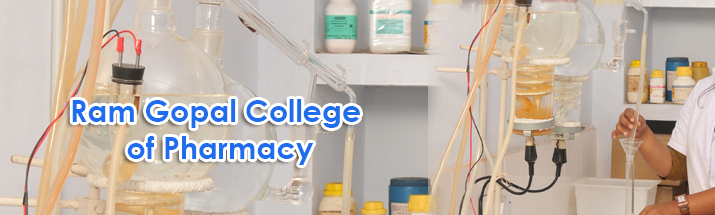
Ram Gopal College of Pharmacy
Approved by- AICTE, PCI, MHRD, Govt of India,
Affiliation from Pt. B.D. Sharma
University of Health Science, Rohtak, Haryana
State Government University



Role of a Pharmacist:
The mission of pharmacy as serving society as the profession responsible for appropriate use of medication, devices, and services to achieve optimal therapeutic income.
The pharmacist should be conceived basically as a knowledge system that renders a health service by concerning itself with understanding drugs and their effects. Thus pharmaceutical care is necessary element of total health care.
The current philosophy or approach to professional practice in pharmacy is designated as pharmaceutical care. This concept holds that the important role of pharmacist is the responsible provision of drug therapy for the purpose of achieving definite outcomes that improves a patient’s quality of life.
Pharmacists, then are those who are educated and licensed to dispense drugs and to provide drug information – they are experts in medication – drug information specialist.
They are the most accessible member of today’s health care team and often come the first source of assistance and advice on many common ailment and health care matters.
Teaching Profession: Many Pharmacy graduates go on to teaching and administrative careers at leading colleges and universities around the world. It offers opportunities to the pharmacists with advance degree in any of the professional specialties like Lecturer, Senior Lecturer, Assistant Professor, Associate Professor, Professor, Principal and director of the education at institute.
Research and Development (R&D): Pharmacy graduates or with PG Degree go on in R&D in various sections like IPR (Intellectual Property Right), DRA (Drug Regulatory Affairs), NDDS (New Drug Delivery System), etc.
Community Pharmacy: It is a hybrid requiring a well developed professional skills and in many cases management abilities.
Clinical Pharmacy: Clinical pharmacists provide direct patient care services that optimize the use of medication and promote health, wellness, and disease prevention. These participate in patient care rounds and drug product selection.
Hospital Pharmacy: Hospital pharmacists advise other health professionals about the actions, interactions, and side effects of drugs, and counsel patients about medications.
Health-systems Pharmacy: The practice of pharmacy in private and state owned hospitals, health maintenance organization, clinics, walk-in health centers, and nursing homes has become a significant setting for pharmacy practice on the last 15 years or so.
Nuclear Pharmacy: It applies the principles and practices of pharmacy and nuclear chemistry to produce radio-active drugs used for diagnosis and therapy.
Industrial pharmacy: Largest numbers of pharmacists are involved in marketing and administration. Some pharmaceutical manufacturers employ pharmacists as their professional service representative to educate physicians and pharmacists about the manufacturer’s products. Pharmacists with master’s degree in business or additional degree in law find additional opportunities in the pharmaceutical industry in the marketing, sales and legal departments. Pharmacists with the PharmD degree serve the industry as professional communication managers and clinical research scientists Production and quality control or quality assurance supervisory position often held by pharmacists with B. Pharm degree.
Government Agencies:Pharmacy graduates work in the Food and Drug Administration, the Drug Enforcement Administration, the Veterans Administration, the Public Health Service, the Armed Forces, the National Institutes of Health, and many other government agencies.
Pharmaceutical Journalism:It offers rewarding experiences for a limited number of pharmacists with writing and editing skills.
Organizational management:The pharmacist in national and state association and on boards of pharmacy. Insurance careers: health and welfare agencies in different managerial position.
College Address
College At:- Near Sultanpur Bird Sanctuary,
Farrukhnagar, Distt.- Gurgaon, Haryana
Phone:- 9818511778
Email:- rgcpcollege@gmail.com
Head Office
A1/11, Prashant Vihar Rohini,
Near Pitampura Metro Station,Opposite Power House
New Delhi, India-110085

